Jeremy Taylor died on the Thirteenth of August in the Year of Our Salvation 1667. The following is a collect recalling him and using part of a well-known collect authored by Taylor:
O God, whose days are without end, and whose mercies cannot be numbered: Make us, we beseech thee, like thy servant Jeremy Taylor, deeply sensible of the shortness and uncertainty of human life; and let thy Holy Spirit lead us in holiness and righteousness all our days; through Jesus Christ our Lord, who liveth and reigneth with thee and the Holy Spirit, one God, now and for ever. Amen.
The following quotations reasonably portray Jeremy Taylor's eucharistic theology and his understanding of eucharistic sacrifice when taken in conjunction with the text of his Eucharistic Liturgy:“The Altar or Holy Table is sedes Corporis et Sanguinis Christi. S. Chrysost: hom: 21. in 2 Cor: et alibi. And if the Altars, and the Arke and the Temple in the Law of Nature and Moses were Holy, because they were God’s Memorialls, as I shewed above, then by the same reason shall the Altar be uperagion, highly Holy, because it is Christ’s Memoriall. ….. Wee doe believe that Christ is there really present in the Sacrament, there is the body and bloud of Christ, which are, ‘verely, and indeed’ taken and received by the faithfull, saith our Church in her Catechisme. ….”
Jeremy Taylor, On the Reverence Due to the Altar, edn Heber-Eden, 1847-1852, V, 330.
“an action among all the instances of religion [as] the most perfect and consummate [which] actually performs all that could be necessary for man, and it presents to man as great a thing as God could give; for it is impossible any thing should be greater than himself. …. Because, after a mysterious and ineffable manner, we receive him, who is light and life, the fountain of grace, the sanctifier of our secular comforts, and the author of holiness and glory. ….. Christ has remained in the world, by the communication of this sacrament. ….. The bread, when it is consecrated, and made sacramental, is the body of our Lord; and the fraction and distribution of it is the communication of that body, which died for us upon the cross.”
Jeremy Taylor, The Great Exemplar, edn. Bohn, 1844: I, 305.
” … whatsoever Christ did at the institution, the same he commanded the Church to do, in remembrance and repeated rites; and himself also does the same thing in heaven for us, making perpetual intercession for his church, the body of his redeemed ones, by representing to his Father his death and sacrifice. There he sits, a High Priest continually, and offers still the same one perfect sacrifice; that is, still represents it as having been once finished and consummate, in order to perpetual and never-failing events. And this, also, his ministers do on earth; they offer up the same sacrifice to God, the sacrifice of the cross, by prayers, and a commemorating rite and re-presentment, according to his holy institution.
"And as all the effects of grace and the titles of glory were purchased for us on the cross, and the actual mysteries of redemption perfected on earth, but are applied to us, and made effectual to single persons and communities of men, by Christ’s intercession in heaven; so also they are promoted by acts of duty and religion here on earth, that we may be ‘workers together with God’, (as St Paul expresses it, 2 Cor. 6: 1) and, in virtue of the eternal and all-sufficient sacrifice, may offer up our prayers and our duty; and by representing that sacrifice, may send up, together with our prayers, an instrument of their graciousness and acceptation. … we ‘celebrate and exhibit the Lord’s death’, in sacrament and symbol; and this is that great express, which, when the church offers to God the Father, it obtains all those blessings which that sacrifice purchased. ...
"… As Christ is a priest in heaven for ever, and yet does not sacrifice himself afresh, nor yet without a sacrifice could he be a priest; but, by a daily ministration and intercession, represents his sacrifice to God, and offers himself as sacrificed: so he does upon earth, by the ministry of his servants; he is offered to God, that is, he is, by prayers and the sacrament, represented or ‘offered up to God, as sacrificed’; which, in effect, is a celebration of his death, and the applying it to present and future necessities of the church, as we are capable, by a ministry like to his in heaven. It follows, then, that the celebration of this sacrifice be, in its proportion, an instrument of applying the proper sacrifice to all the purposes which it first designed. It is ministerially, and by application, an instrument propitiatory; it is eucharistical, it is an homage, and an act of adoration; and it is impetratory, and obtains for us, and for the whole church, all the benefits of the sacrifice, which is now celebrated and applied; that is, as this rite is the remembrance and ministerial celebration of Christ’s sacrifice, so it is destined to do honour to God, to express the homage and duty of his servants, to acknowledge his supreme dominion, to give him thanks and worship, to beg pardon, blessings, and supply of all our needs.”
Jeremy Taylor, The Great Exemplar, edn. Bohn, 1844: I, 308.
“When the holy man stands at the table of blessing, and ministers the rite of consecration, then do as the angels do, who behold, and love, and wonder that the Son of God should become food to the souls of his servants: that he, who cannot suffer any change or lessening, should be broken into pieces, and enter into the body to support and nourish the spirit, and yet at the same time remain in heaven, while he descends to thee upon earth. …. These are such glories, that although they are made so obvious, that each eye may behold them, yet they are also so deep, that no thought can fathom them: but so it hath pleased him to make these mysteries to be sensible, because the excellency and depth of the mercy is not intelligible; that while we are ravished and comprehended within the infiniteness of so vast and mysterious a mercy, yet we may be sure of it, as of that thing we see, and feel, and smell, and taste; but yet it is so great we cannot understand it.”
Jeremy Taylor, The Rule and Exercise of Holy Living, edn. Bohn, 1844: I, 498.
“In the act of receiving, exercise acts of faith with much confidence and resignation, believing it not to be common bread and wine, but holy in their use, holy in their signification, holy in their change, and holy in their effect: and believe, if thou art a worthy communicant, thou dost as verily receive Christ’s body and blood to all effects and purposes of the Spirit, as thou dost receive the blessed elements into thy mouth, that thou puttest thy finger to his hands, and thy hand into his side, and thy lips to the fontinel of blood, sucking life from his heart; and yet if thou dost communicate unworthily, thou eatest and drinkest Christ to thy danger, and death, and destruction. Dispute not concerning the secret of the mystery, and the nicety of the manner of Christ’s presence; it is sufficient to thee, that Christ shall be present to thy soul, as an instrument of grace, as a pledge of the resurrection, as the earnest of glory and immortality, and a means of many intermedial blessings, even all such as are necessary on thy part but a holy life, and a true belief of all the sayings of Christ; amongst which, indefinitely assent to the words of institution, and believe that Christ, in the holy sacrament, gives thee his body and his blood. He that believes not this, is not a Christian. He that believes so much, needs not to inquire further, nor to entangle his faith by disbelieving his sense.”
Jeremy Taylor, The Rule and Exercise of Holy Living, edn. Bohn, 1844: I, 499.
“Now Christ did establish a number of select persons to be ministers of this great sacrifice, finished upon the cross; that they also should exhibit and represent to God, in the manner which their Lord appointed them, this sacrifice, commemorating the action and suffering of the great priest; and by the way of prayers and impetration, offering up that action in behalf of the people,
epi to anw jusiasthrion anapemyaV taV jusiaV, as Gregory Nazianzen expresses it, ‘sending up sacrifices to be laid upon the altar in heaven’; that the church might be truly united unto Christ their head, and in the way of their ministry, may do what he does in heaven. For he exhibits the sacrifice, that is, himself, actually and presentially in heaven: the priest on earth commemorates the same, and, by his prayers, represents it to God in behalf of the whole catholic church; presentially too, by another and more mysterious way of presence; but both Christ in heaven, and his ministers on earth, do actuate that sacrifice, and apply it to its purposed design by praying to God in the virtue and merit of that sacrifice: Christ himself, in high and glorious manner; the ministers of his priesthood (as it becomes ministers) humbly, sacramentally, and according to the energy of human advocation and intercession; this is the sum and great mysteriousness of Christianity …”
Jeremy Taylor, Clerus Domini, edn. Bohn, 1844: III, 694-695.




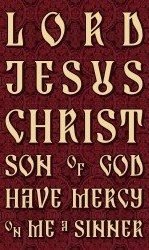

 O merciful Lord Jesus, I confess myself to be a most grievous and wretched sinner, not worthy to approach into thy presence, altogether unfit and unmeet to receive thee under the roof of my soul, in respect of the stains and pollutions thereof, and that it is not decked and fitted, with such good graces, as thy majesty and presence requireth, and therefore am afraid to come near unto thee: yet, O Lord, considering thy comfortable saying, that thou dost nor desire the death of a sinner, but that he should turn unto thee and live; and thy blessed invitation, how lovingly, with the arms of thy mercy stretched out, thou hast called all, that are heavily oppressed with the burden of their sins, to come to thee for comfort and ease. And lastly, thy usual practice, in pitying and relieving those which were cast down with the thought of their misdeeds; as the Thief on the Cross, Mary Magdalen, the Woman taken in Adultery, the Publican, Peter and Paul, I am comforted and emboldened to come unto thee, assuredly trusting, that thou wilt of thy goodness supply my defects, and make me a worthy receiver of the high mystery and benefit of thy blessed Sacrament, whereof of myself I am altogether unworthy. Stretch out thy right hand, O sweet Jesus, to me thy poor servant, and give out of thy rich store-house of mercy what I want; that thereby I may be made a living temple to thee, and an acceptable habitation for thine honour to abide in: and grant, that being cleansed by thy mercy and goodness, I may, by thy grace and power, persevere in all godliness of conversation, to the end of my days, and attain to that blessed place, where thou reignest, with the Father and Holy Spirit, world without end. Amen.