Showing posts with label Ordinariates. Show all posts

01 July 2012

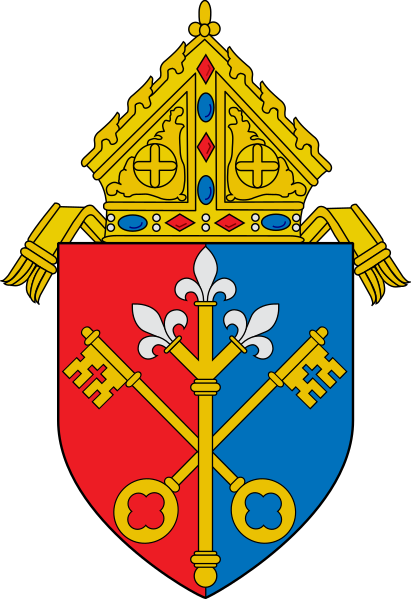
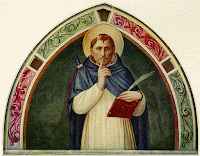
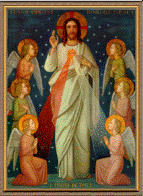
Game: name the Ordinariate

+


A little game: pretend you have not seen the above and do not know what they signify:  could you match the above with the nations represented?  
Hint: USA-CA, AUS, UK, but not in that order...
 
+Ubi caritas et amor.

20 June 2011

Pray for the Ordinariates


Borrowed from the website http://ordinariate.org.uk/


Eternal Father, we place before you the project of forming the Personal Ordinariates for Anglicans seeking full communion with the Catholic Church.
We thank you for this initiative of Pope Benedict XVI, and we ask that, through the Holy Spirit, the Ordinariates may become: families of charity, peace and the service of the poor, centres for Christian unity and reconciliation, communities that welcome and evangelize, teaching the Faith in all its fullness, celebrating the liturgy and sacraments with prayerful reverence and maintaining a distinctive patrimony of Christian faith and culture.
Drawing on that heritage we pray:
Go before us, O Lord,
in all our doings
with thy most gracious favour,
and further us
with thy continual help;
that in all our works, begun,
continued and ended in thee,
we may glorify thy holy name,
and finally by thy mercy
obtain everlasting life;
through Jesus Christ our Lord.
Amen.
Our Lady of Walsingham:
Pray for us as we claim
your motherly care.
Saint Therese of the Infant Jesus:
Pray for us as we place this
work under your patronage.
Blessed John Henry Newman:
Pray that Christ’s Heart
may speak unto our hearts.
Saints & Martyrs of England,
Wales, Scotland & Ireland:
Pray for us and accompany
us on our pilgrim way.

+Laus Deo!

16 June 2011

Cardinal Wuerl's USCCB Presentation on the Implementation of 'Anglicanorum coetibus'

htt.
Cardinal Di Nardo
Although His Eminence Donald Cardinal Wuerl's speech has appeared on a number of blogs, I think it wise to post it here so it is more widely published abroad..  I am thrilled with the news of Father Jeffrey Steenson's involvement and the future role of St. Mary's Seminary, Houston both with regard to the formation of the new priests.  Many thanks go to His Eminence Daniel Cardinal Di Nardo for offering St. Mary's Seminary as it is situated in the Pastoral Provision / Anglican Use motherland of Texas (and a few blocks from my home parish Our Lady of Walsingham Catholic Church, Houston).  

It was good to hear Cardinal Di Nardo use the phrase "Anglican Rite Usage" when referring to the liturgical rites and patrimony as it makes the salient point that Anglicans have their own full rite yet within the Catholic Church what can be brought in from that source can only be seen as an Usage or use within the Latin rite.   All in all Cardinal Wuerl's speech was sober, factual, and without any great surprises for those who had followed the developments closely.  I think many of us were hoping to learn at least the name for the Ordinariate in the USA, but that was not to be nor did we learn who would be Ordinary.

The Question and Answer period provided some of the most helpful information, and if one were to admit a criticism it is that His Eminence though superb in presenting the facts clouded some of his presentation with the offering of personal opinion rather than the facts as they stand.  The Cardinal also announced that The United States Catholic Catechism generated by the USCCB would be the course of study for laity and others entering the Church in this fashion.  This local catechism will serve well enough as a base text, and as it is  The Catechism of the Catholic Church and the Compendium are already the texts being studied by many who are  interested in being reconciled with Holy Church through Anglicanorum coetibus.  I am not alone in wishing that the excellent Evangelium catechetical series from the Catholic Church in England and Wales had been chosen for use as it has been for the Personal Ordinariate of Our Lady of Walsingham in the UK.  I hope it will be considered as an additional recommended resource.

Nevertheless, I should think even those concerned about Cardinal Wuerl's appointment as delegate (since His Eminence had been seen by some as less than enthusiastic in his support of the Pastoral Provision's implementation in his previous diocese) will come to thank His Eminence right heartily for all of the tremendous work he and Fr Scott Hurd have done in moving forward the cause of the Personal Ordinariate in the USA for groups of Anglicans seeking reconciliation with Holy Church.  Such work is often thankless, and we should make the point of writing Cardinal Wuerl and Fr Hurd to express our heartfelt thanks.


His Eminence Donald Cardinal Wuerl:
Consultation on Implementation
of
Anglicanorum coetibus
United States Conference of Catholic Bishops

15 June A.D. 2011

Cardinal Wuerl
Anglicanorum coetibus, an Apostolic Constitution which provides for groups of Anglicans to enter into corporate union with the Catholic Church, was issued by our Holy Father in November 2009. Specifically, Anglicanorum coetibus allows for the erection of Personal Ordinariates, juridically similar to dioceses, in which elements of the Anglican heritage may be maintained.

In early 2010, Cardinal Francis George, then President of our Conference, established the USCCB’s Ad Hoc Committee for the Implementation of Anglicanorum coetibus in the United States. Bishop Robert McManus of Worcester, Bishop Kevin Vann of Fort Worth and myself are members of this Committee which I Chair.

On March 23, 2010, I gave a report to the USCCB Administrative Committee. In the context of that report, I attempted to answer questions and also solicited the observations of the bishops on establishing an Ordinariate in the United States. Subsequent to the meeting, the bishops’ responses were compiled in a report, which also included observations by USCCB Senior Staff. This report was most helpful in conveying the mind of the USCCB at meetings in Rome on Anglicanorum coetibus, directed by the Congregation for the Doctrine of the Faith from April 26 through April 28, 2010.

Father Scott Hurd
The Ad Hoc Committee met in Florida during the USCCB’s June meeting. We were joined by Father Scott Hurd, a priest of the Archdiocese of Washington who was ordained through the Pastoral Provision. At this meeting, it was decided that the responsibilities of the Committee are two-fold: 1) assess the level of interest in such an Ordinariate in the United States and thus provide appropriate information for both our Conference and the Holy See; and 2) facilitate the implementation of Anglicanorum coetibus in the United States.
On August 22, 2010, Father Hurd was appointed as liaison with the USCCB for the implementation of Anglicanorum coetibus. In this capacity, he serves as staff to the Ad Hoc Committee.

The USCCB made a public announcement in September 2010 of my appointment as the Congregation for the Doctrine of the Faith’s Delegate for the implementation of Anglicanorum coetibus in the United States. In the official press release, Anglicans wishing to be received into the Catholic Church were invited to express their intentions to me in writing by December 31, 2010.

Since that time, every Anglican group and individual who has written has received an acknowledgement of their statement of intention. Anglican groups were sent a “Community Profile” questionnaire, based upon established criteria for assessing Anglican communities. Anglican clergy not associated with a larger group were sent a “Clergy Profile” questionnaire. Finally, Anglican laity not associated with a larger group were sent an acknowledgement to their letter, instructing them to await further instructions, should an Ordinariate be established.

Personal contacts were also made with interested Anglicans during this time, both by members of the Ad Hoc Committee and by Father Hurd, who is in frequent contact with interested Anglicans by telephone, e-mail, and Facebook.

In January 2011, an overview and summary of the responses received from interested Anglicans was sent to the Congregation for the Doctrine of the Faith. A modified version of this report was submitted to the USCCB President, Archbishop Timothy Dolan, who in turn shared it with all members of the Conference. Both reports concluded with the assessment that it appears feasible to establish an Ordinariate in the United States at this time.

Shortly thereafter, an extensive assessment of those Anglican communities intending to enter an Ordinariate was compiled and sent to the CDF. This assessment was referenced in my report on Anglicanorum coetibus to the USCCB Administrative Committee on March 22, 2011. In this report, I explained that all bishops with an Anglican group in their jurisdiction requesting to be received into an Ordinariate would be invited to submit by May 1 any information they wished to share with the Ad Hoc Committee. Many bishops accepted this invitation and provided helpful information.

An analysis of the academic and ministerial formation history of all petitioning Anglican clergy was submitted to the CDF at the beginning of April. This was done to evaluate their formation needs for Catholic ordination. This analysis proposed that petitioning Anglican clergy be placed into one of three categories: those eligible for an intense period of formation; those eligible for the intense period plus an additional period of mandated continuing formation after ordination; and those whose formation histories would not recommend them for either of these options.

In planning for the implementation of Anglicanorum coetibus, a program of priestly formation was developed that would allow for a concentration of study in the areas of historic theological divergence in anticipation of ordination to the priesthood. The CDF approved the modified program of priestly formation and authorized its use.

With the encouragement of Cardinal Daniel DiNardo, the leadership of the Archdiocese of Galveston-Houston’s Major Seminary, Saint Mary’s, agreed to implement the priestly formation program. A Saint Mary’s faculty member, Father Jeffrey Steenson, has been instrumental in designing the specific elements of this program, in collaboration with Cardinal DiNardo and myself. Father Steenson is the former Episcopal Bishop of the Rio Grande, who was received into the Church in 2007. The formation program will be available on site at the seminary and also through distance learning facilities.

In mid-April, Anglican clergy seeking ordination in an Ordinariate were directed as part of the process to submit dossiers to me by May 16 for eventual review by the CDF. Since that time, completed dossiers have been sent to Rome for evaluation.

Those Anglican clergy whose dossiers are granted a Nulla Osta by the CDF, indicating that they are eligible to proceed with the approved priestly formation process, will be directed to provide additional information to the CDF. This information will include the results of criminal background checks, a psychological evaluation, a letter of resignation from their Anglican entity, a Votum from the Delegate or Ordinary, and a Votum from the Catholic bishop where the candidate resides, who will have been invited to interview him, either personally or through a delegate. If possible, a Votum from the candidate’s former Anglican authority will also be included.
During this time, those candidates responsible for a congregation will be guiding the catechetical formation of their people, utilizing the United States Catholic Catechism for Adults, as has been approved by the CDF. Candidates will be encouraged to invite speakers from the local Catholic community.

Once the second set of documentation has been sent to the CDF, a candidate will cease celebrating the Anglican Eucharist. When a rescript has been issued and received, he may be ordained to the diaconate immediately, with the intention that his subsequent priestly ordination would coincide with the reception of his parish group into full communion.

Since the Holy See has indicated its wish to establish an Ordinariate in the United States this Fall, I am grateful for this opportunity to conduct this consultation with the members of our Conference, to receive any additional observations you might have and to indicate a few areas where we as bishops can be of assistance to a newly-appointed ordinary as he attempts to implement an Ordinariate in the United States.

Before inviting your observations and, I hope, support for this effort, I would like to touch on a number of areas where individually we as bishops can be of assistance to a newly formed Ordinariate and its efforts to review possible candidates for priestly ordination.

Since each candidate will be required to have a criminal background check and a psychological evaluation, I would hope that each of us would be able to provide these services for a candidate for the Ordinariate just as we do for those who are seeking admission in our priestly formation programs or to minister in a diocesan program.

A second area where we can perhaps be of some assistance is to offer worship space to a small community that would be a part of the new Ordinariate. Most of them will not have property such as a church and meeting facilities. Our hospitality in providing them worship space would be a sign of generosity on our part and, I am sure, greatly welcomed by them.

An additional way we can facilitate the work of the Ordinariate would be to assign priests who would function as a bishop’s delegate. These delegates would meet and interview candidates for priesthood ordination and, perhaps, serve as a mentor to assist with any issues that arise in the formation process.

Fourth, I suggest that we make available the resources of our Tribunals to those Anglicans, both clergy and lay, who will need to secure an annulment before being received into an Ordinariate.

Another area where collaboration at the local level could be helpful is in the catechetical preparation of the lay faithful of the former Anglican congregation. While this is the responsibility of the Ordinariate, and specifically the head of the congregation seeking membership in the Ordinariate, perhaps someone involved in catechesis in the neighboring Catholic parish (Director of Religious Education, Coordinator of Religious Education or a senior catechist) might be willing to assist in the catechetical process for those lay faithful coming into the Ordinariate and making their profession of faith as a Catholic.

It might also be helpful to note that the establishment of an Ordinariate and the process for the Pastoral Provision are two distinct responses. The Ordinariate deals with those seeking to come into the Catholic Church as a group. The Pastoral Provision is intended for an individual seeking ordination as a Catholic priest.
Finally, as this consultation unfolds, I welcome your input, observations and comments.

Thank you.
  + + +

The Complimentary Norms given by the Vatican to accompany Anglicanorum coetibus may be found at this Vatican website link.
+Laus Deo!

17 May 2010

Of future Ordinariates and Liturgical Texts


Over at Shawn Tribe's magnificent The New Liturgical Movement blog, I made the following comment in response to a post on the future Ordinariates for former Anglicans entering the Catholic Church as well as the liturgical texts that will be authorised, and I post it here so that others may read my thoughts upon this important subject if they should happen upon it:

I offer a word of caution in this area. Each nation in the Anglican Communion is very different from England. Roman Catholics (and English Anglicans) often make the mistake that opinions in England are the authentic opinions of the Anglican Communion, and nothing could be further from the truth.

The good Father is largely correct in his general estimation of Anglican English preferences. However, what the Ordinariates require is a great generosity in the provisional authorisation of liturgical texts in order to meet the needs of Anglicans entering the Church in nations outside of England. The specific meaning is that Anglican texts like the English Missal, the Anglican Missal, and the Cowley American Missal will have a provisional place in the Ordinariates. Likewise, the Book of Divine Worship used by the Roman Catholic Anglican Use parishes in the States provides a wide and generous plan of all texts and rites in both hieratic English as well as the common current idiom.

There should be a period of long reflexion upon the Sarum Missal and the texts and rites of the Caroline Divines and the Non-Jurors, and it is without question that some or all of these texts are part of that rich Anglican patrimony of which Pope Benedict has so eloquently spoken. Generosity of provision simply means that more Anglicans will be able to find their way home to Holy Mother Church, and it is the reconciliation of Anglicans with the Church that is the point of any of these provisions. Generosity of provision is essential with an accent upon 'generosity' as the watchword of these endeavours.
+Laus Deo!

16 January 2010

A Prayer from Fr. James Moore


A Prayer of Supplication


O

JESUS, through the Immaculate Heart of Mary, I offer to you my continual obedience, pleading that all Anglicans seeking union with the Apostolic See of Peter may have the fruition of their hope. By the power of your Divine Spirit so guide the Holy Father in Rome that this union will be accomplished and that what is good and true in our heritage may be preserved to the benefit of the Universal Church. Grant that Anglican bishops and priests longing for this union may be granted continued exercise of the priestly ministry under the authority of the Roman See and that Christians everywhere may once again know the Chair of Peter as that rock upon which your Church on earth is founded, against which hell cannot prevail. Amen.


Written by Fr. James T. Moore, PhD
ca. 1978


13 December 2009

Anglo-Catholics do have a real patrimony


Michael Ramsey, pray for us.

After some unfortunate and awkward statements by English Catholics who do not grasp the Apostolic importance of Anglicanorum coetibus, the Revd Anthony Reader-Moore, SSC provided an excellent response to one such lamentable letter, printed recently in Britain's Catholic Herald, and which I quote at length below:


Anglo-Catholics do have a real patrimony

Anthony Reader-Moore responds to Catholics who suggest that Anglicans considering the Pope’s offer have no true tradition of their own

It is right that there should be vigorous debate concerning the new Apostolic Constitution for Anglicans and what comprises their patrimony, but the letter by Robert Ian Williams in the November 27 issue, for all its apparent erudition, was not helpful and ought not to go unchallenged.

Indeed, it presented a narrow and somewhat jaundiced approach, hardly calculated to encourage a greater understanding of Anglican history among cradle Catholics, nor to assure Church of England clergy and laity who are seriously considering taking this course that they will indeed be welcome in the English Catholic Church.

It can be fairly argued that the “Anglican patrimony” is much greater than either Thomas Cranmer or the various versions of the Book of Common Prayer, integral as they are to Anglicanism both here and overseas. Thomas Cranmer’s Protestantism was mainly a personal matter acquired over a number of years prior to the publication of the First Prayer Book in 1549, largely as a result of theological exploration and his contacts with a number of continental reformers such as Martin Bucer and Philipp Melancthon. It more or less remained so prior to the death of Henry VIII. After that, with the accession of a child king greatly influenced by his Seymour relatives in a Protestant direction, Cranmer had an unparalleled opportunity to introduce what had been a private matter into the public realm of ecclesiastical and political affairs.

This suited not only the personal predilections of Protector Somerset, but more especially his political strategy and so became the official religious and political policy of the regime. If it was a matter for the ruling elite, it was hardly one for many of the bishops, most of the clergy and still less so for the bulk of the ordinary people, who remained staunchly Catholic in outlook and devotion. The English Reformation was always fundamentally about power rather than religious belief, the latter being seen as a convenient vehicle through which to impose changes as much sociological as they were concerned with faith.

Indeed, Cranmer’s First Prayer Book of 1549 was essentially a conservative reform and it is wrong to suggest that at this point he got rid of such things as the Benedictus and Agnus Dei from the liturgy. The Eucharistic rite was of traditional shape and order and still called “the Mass”, much of the traditional ceremonial being retained. Stephen Gardiner, Bishop of Winchester and a reactionary and opponent of Cranmer who later on was to be Mary I’s lord chancellor, accepted that it was fully patient of a Catholic interpretation. It was only with the imposition of the Second Prayer Book in 1552 that the regime felt able to bring in a more thorough going and radical change, but this lasted less than a year and it is questionable whether it was adopted much beyond the environs of London and the Home Counties prior to the death of Edward VI in the spring of 1553. Indeed, there is some evidence that upon her accession Elizabeth I would have preferred to have reinstated the 1549 Book rather than the compromise version that was actually adopted.

The position of the Church of England has always been that despite the many and various changes introduced into the religious life of this country during the upheavals of the 16th century – and no European state was not affected in some way or other by this – and notwithstanding the break with Rome, Henry VIII did not found a new church as such, but rather wrested from the papacy final control of all matters ecclesiastical within his kingdom. Thus Ecclesia Anglicana has always claimed to be the authentic manifestation of the One Holy Catholic Church in this land, the historic church of the English nation, maintaining continuity with the primitive Church of the early Christian centuries. Unlike some of the established churches of northern Europe, mainly of the Lutheran tradition, historically she has understood herself to be an integral, if lamentably separated, part of the Latin Church of the West. Because of this, there is an deep-seated consciousness of sharing a vast amount in common with the Roman Communion, from which indeed she sprang. So in this respect is is right to suggest that “there is nothing authentically Anglican about the ritual”. The nearest one could get to something “Anglican” as such might be the medieval Sarum Use, but even that was a version of the Roman. However, when he then asserts that the use of vestments and other liturgical practices were an wholesale appropriation by 19th-century ritualists, he is being at best misleading and at worst utterly wrong.

At the beginning of the 1662 Book of Common Prayer (still the official liturgy of the Church of England in spite of the Alternative Service Book 1980 and, more recently, Common Worship) is what is known as the “Ornaments Rubric”. Here it states unequivocally that the chancels of churches are to remain as they were “in times past” and “such ornaments of the church and of the Ministers thereof, at all times of their ministration, shall be retained and be in use as were in this Church of England, by the authority of Parliament, in the second year of the reign of King Edward the Sixth”.

That, of course, was 1549, the year in which the First Prayer Book was promulgated and in which latter is set out in some detail what vesture is to be used in divine worship, including both the chasuble and the cope. So it is quite wrong to say that such things were reintroduced by the Tractarians and their immediate followers “illegally” during the 19th century. What they saw themselves as doing was returning the Church of England to a strict legal integrity by the use of the lawfully required ornaments and fostering a renewed understanding of her essential Catholicity through matters of worship and spirituality.

Indeed, a sense of the latter, even if muted, had never been entirely lost and is found in the writings of such figures as Bishop Andrewes, John Donne, George Herbert, William Laud and many of the later Caroline divines. The spark of Catholic belief and devotion, albeit in an austere and restrained manner, continued to be fostered by some of the Non-Jurors in the 18th century and is an integral part of the wider Anglican patrimony which Catholic Anglicans would bring with them into any future Ordinariate.

The Catholic Revival has had an incalculable effect on the life and worship of the average English parish, far more so than any other comparable movement either before or since. This is witnessed by the interior furnishings and decorations of the vast majority of our parish churches, even those of an Evangelical hue, and such transformation is a direct result of what Anglican Catholics were doing from the latter half of 19th century onwards. One has only to compare and contrast with what was normative in the time, say, of Jane Austen to see how profound and far-reaching this influence has been and how much a more objective understanding of the “beauty of holiness” has resulted.

Yet this was essentially the outward expression of a profoundly Catholic ecclesiology and spirituality which led to an increased desire on the part of many in the Church of England, by no means confined only to Anglo-Catholics, to explore the possibility of some kind of corporate re-union with the Holy See. The Malines Conversations in the Twenties leading, eventually to the visits of successive archbishops of Canterbury to various popes, resulting in the setting up of ARCIC and the historic visit of Pope John Paul II to Canterbury in 1982, are all evidence of a burning desire that our two churches should be one again. Thirty years ago that vision was such that it looked capable of some kind of accomplishment. The tragedy is that, through the increasing adoption by the official Church of England of an uncompromising liberal and feminist agenda, this has been largely thrown away: corporate re-union at this level seems further away than ever.

Pope Benedict has shown huge understanding and compassion for traditionalist Anglicans and knows where they are coming from. His initiative is one of incredible generosity and vision and helps in no small measure to redeem some of the bitter disappointment and despair that the events of the last few years have caused people like myself to feel. It allows us to hope again; not least that what we have grown up with and loved, many of us from birth, is still valued and wanted – and where it really counts too – at the very heart of the Catholic Church.

The Rev Anthony Reader-Moore SSC is honorary assistant priest of St Mary’s, Wellingborough, Northamptonshire, and chairman of Peterborough Forward in Faith
+Laus Deo!

24 October 2009

Brother Stephen, O.Cist.

Be sure to read Brother Stephen's blog regarding developments among Anglo-Catholics in England as well as the whole matter of Personal Ordinariates granted in the new Apostolic Constitution:

http://subtuum.blogspot.com/2009/10/reflections-on-forward-in-faith.html

As a former Anglo-Catholic from S. Clement's Episcopal Church in Philadelphia, he has an important perspective on all of these matters.