22 September 2008

Illness, hurricane, destruction


I am sorry, dear readers, that I have not kept up with this blog. I have been very ill, and it looks like I will finally need surgery to remove a cyst from within my spinal cord and to remove a cyst at the back of my brain.

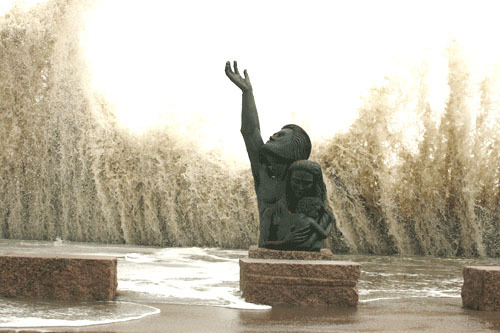
Additionally, my home was submerged under 6 feet of water by Hurricane Ike, and I have lost most of my possessions.

Such times teach one that no matter how treasured some object may be the real treasure in life is to be found in the bonds of family and friends within the eternal friendship of Our Lord Jesus Christ.

Please keep us in your prayers, and please ask Our Lady, Star of the Sea, to intercede for Galveston Island and her people.


14 August 2008

Jeremy Taylor and Eucharistic Sacrifice, Part Four


The following prayers are prayers to be said before Reception of the Holy Communion in Taylor's Eucharistic Liturgy which he authored for use during the period when the Book of Common Prayer was banned. The use of material from the Eastern Orthodox Divine Liturgies is self-evident:

O Blessed Jesus, my Lord and My God, thou art the celestial food and the life of every man that cometh unto thee. I have sinned against Heaven and before thee, and am not worthy to partake of these holy Mysteries : but thou art my merciful Saviour : Grant that I may religiously, thankfully, and without reproof partake of thy blessed Body and Blood for the remission of my sins, and unto life eternal. Amen.

I Believe, O God, and confess that thou art Christ the Son of the living God, who came into the World to save Sinners, whereof I am chief. Lord, make me this day partaker of thy heavenly Table ; for thou dost not give thy secrets to thy Enemies, but to the Sons of thine own House. Let me never give thee a Judas kiss ; I confess thee and thy glories, I invocate thee and thy mercies : I trust upon thee and thy goodness like the Thief upon the Cross ; Lord, remember me in thy Kingdom, with the remembrances of an everlasting love. Lord, I am not worthy that thou shouldst come under my roof ; but as thou didst vouchsafe to lie in a Manger with Beasts, and to enter into the house of Simon the leper, nor didst despise the repenting Harlot when she kissed thy Feet ; so vouchsafe to lodge in my Soul, though it be a place of beastly affections and unreasonable passions ; throw them out and dwell there for ever ; purifie my Soul, accept the Sinner, cleanse the Leper, so shall I be worthy to partake of this divine Banquet. Amen.


13 August 2008

Jeremy Taylor and Eucharistic Sacrifice, Part Three

Jeremy Taylor died on the Thirteenth of August in the Year of Our Salvation 1667. The following is a collect recalling him and using part of a well-known collect authored by Taylor:

O God, whose days are without end, and whose mercies cannot be numbered: Make us, we beseech thee, like thy servant Jeremy Taylor, deeply sensible of the shortness and uncertainty of human life; and let thy Holy Spirit lead us in holiness and righteousness all our days; through Jesus Christ our Lord, who liveth and reigneth with thee and the Holy Spirit, one God, now and for ever. Amen.

The following quotations reasonably portray Jeremy Taylor's eucharistic theology and his understanding of eucharistic sacrifice when taken in conjunction with the text of his Eucharistic Liturgy:


“The Altar or Holy Table is sedes Corporis et Sanguinis Christi. S. Chrysost: hom: 21. in 2 Cor: et alibi. And if the Altars, and the Arke and the Temple in the Law of Nature and Moses were Holy, because they were God’s Memorialls, as I shewed above, then by the same reason shall the Altar be uperagion, highly Holy, because it is Christ’s Memoriall. ….. Wee doe believe that Christ is there really present in the Sacrament, there is the body and bloud of Christ, which are, ‘verely, and indeed’ taken and received by the faithfull, saith our Church in her Catechisme. ….”

Jeremy Taylor, On the Reverence Due to the Altar, edn Heber-Eden, 1847-1852, V, 330.


“an action among all the instances of religion [as] the most perfect and consummate [which] actually performs all that could be necessary for man, and it presents to man as great a thing as God could give; for it is impossible any thing should be greater than himself. …. Because, after a mysterious and ineffable manner, we receive him, who is light and life, the fountain of grace, the sanctifier of our secular comforts, and the author of holiness and glory. ….. Christ has remained in the world, by the communication of this sacrament. ….. The bread, when it is consecrated, and made sacramental, is the body of our Lord; and the fraction and distribution of it is the communication of that body, which died for us upon the cross.”

Jeremy Taylor, The Great Exemplar, edn. Bohn, 1844: I, 305.


” … whatsoever Christ did at the institution, the same he commanded the Church to do, in remembrance and repeated rites; and himself also does the same thing in heaven for us, making perpetual intercession for his church, the body of his redeemed ones, by representing to his Father his death and sacrifice. There he sits, a High Priest continually, and offers still the same one perfect sacrifice; that is, still represents it as having been once finished and consummate, in order to perpetual and never-failing events. And this, also, his ministers do on earth; they offer up the same sacrifice to God, the sacrifice of the cross, by prayers, and a commemorating rite and re-presentment, according to his holy institution.

"And as all the effects of grace and the titles of glory were purchased for us on the cross, and the actual mysteries of redemption perfected on earth, but are applied to us, and made effectual to single persons and communities of men, by Christ’s intercession in heaven; so also they are promoted by acts of duty and religion here on earth, that we may be ‘workers together with God’, (as St Paul expresses it, 2 Cor. 6: 1) and, in virtue of the eternal and all-sufficient sacrifice, may offer up our prayers and our duty; and by representing that sacrifice, may send up, together with our prayers, an instrument of their graciousness and acceptation. … we ‘celebrate and exhibit the Lord’s death’, in sacrament and symbol; and this is that great express, which, when the church offers to God the Father, it obtains all those blessings which that sacrifice purchased. ...

"… As Christ is a priest in heaven for ever, and yet does not sacrifice himself afresh, nor yet without a sacrifice could he be a priest; but, by a daily ministration and intercession, represents his sacrifice to God, and offers himself as sacrificed: so he does upon earth, by the ministry of his servants; he is offered to God, that is, he is, by prayers and the sacrament, represented or ‘offered up to God, as sacrificed’; which, in effect, is a celebration of his death, and the applying it to present and future necessities of the church, as we are capable, by a ministry like to his in heaven. It follows, then, that the celebration of this sacrifice be, in its proportion, an instrument of applying the proper sacrifice to all the purposes which it first designed. It is ministerially, and by application, an instrument propitiatory; it is eucharistical, it is an homage, and an act of adoration; and it is impetratory, and obtains for us, and for the whole church, all the benefits of the sacrifice, which is now celebrated and applied; that is, as this rite is the remembrance and ministerial celebration of Christ’s sacrifice, so it is destined to do honour to God, to express the homage and duty of his servants, to acknowledge his supreme dominion, to give him thanks and worship, to beg pardon, blessings, and supply of all our needs.”

Jeremy Taylor, The Great Exemplar, edn. Bohn, 1844: I, 308.


“When the holy man stands at the table of blessing, and ministers the rite of consecration, then do as the angels do, who behold, and love, and wonder that the Son of God should become food to the souls of his servants: that he, who cannot suffer any change or lessening, should be broken into pieces, and enter into the body to support and nourish the spirit, and yet at the same time remain in heaven, while he descends to thee upon earth. …. These are such glories, that although they are made so obvious, that each eye may behold them, yet they are also so deep, that no thought can fathom them: but so it hath pleased him to make these mysteries to be sensible, because the excellency and depth of the mercy is not intelligible; that while we are ravished and comprehended within the infiniteness of so vast and mysterious a mercy, yet we may be sure of it, as of that thing we see, and feel, and smell, and taste; but yet it is so great we cannot understand it.”

Jeremy Taylor, The Rule and Exercise of Holy Living, edn. Bohn, 1844: I, 498.


“In the act of receiving, exercise acts of faith with much confidence and resignation, believing it not to be common bread and wine, but holy in their use, holy in their signification, holy in their change, and holy in their effect: and believe, if thou art a worthy communicant, thou dost as verily receive Christ’s body and blood to all effects and purposes of the Spirit, as thou dost receive the blessed elements into thy mouth, that thou puttest thy finger to his hands, and thy hand into his side, and thy lips to the fontinel of blood, sucking life from his heart; and yet if thou dost communicate unworthily, thou eatest and drinkest Christ to thy danger, and death, and destruction. Dispute not concerning the secret of the mystery, and the nicety of the manner of Christ’s presence; it is sufficient to thee, that Christ shall be present to thy soul, as an instrument of grace, as a pledge of the resurrection, as the earnest of glory and immortality, and a means of many intermedial blessings, even all such as are necessary on thy part but a holy life, and a true belief of all the sayings of Christ; amongst which, indefinitely assent to the words of institution, and believe that Christ, in the holy sacrament, gives thee his body and his blood. He that believes not this, is not a Christian. He that believes so much, needs not to inquire further, nor to entangle his faith by disbelieving his sense.”

Jeremy Taylor, The Rule and Exercise of Holy Living, edn. Bohn, 1844: I, 499.


“Now Christ did establish a number of select persons to be ministers of this great sacrifice, finished upon the cross; that they also should exhibit and represent to God, in the manner which their Lord appointed them, this sacrifice, commemorating the action and suffering of the great priest; and by the way of prayers and impetration, offering up that action in behalf of the people, epi to anw jusiasthrion anapemyaV taV jusiaV, as Gregory Nazianzen expresses it, ‘sending up sacrifices to be laid upon the altar in heaven’; that the church might be truly united unto Christ their head, and in the way of their ministry, may do what he does in heaven. For he exhibits the sacrifice, that is, himself, actually and presentially in heaven: the priest on earth commemorates the same, and, by his prayers, represents it to God in behalf of the whole catholic church; presentially too, by another and more mysterious way of presence; but both Christ in heaven, and his ministers on earth, do actuate that sacrifice, and apply it to its purposed design by praying to God in the virtue and merit of that sacrifice: Christ himself, in high and glorious manner; the ministers of his priesthood (as it becomes ministers) humbly, sacramentally, and according to the energy of human advocation and intercession; this is the sum and great mysteriousness of Christianity …”
Jeremy Taylor, Clerus Domini, edn. Bohn, 1844: III, 694-695.

Jeremy Taylor and the Eucharistic Sacrifice, Part Two

This second post continues with selections from the Eucharistic Liturgy of Jeremy Taylor which he composed for use during the period when the Book of Common Prayer and the Anglican Church were banned. The Eastern Divine liturgies such as the Liturgy of St. James of Jerusalem provide much of the source material employed by Taylor in both his actual language as well as theological framework.


Lift up your hearts.
We lift them up unto the Lord.

Let us give thanks unto our Lord God.
It is just and right so to do.

It is indeed truly just, righteous, and fitting to praise and to glorify, to worship and adore, to give thanks and to magnify thee the great Maker of all creatures, visible and invisible, the treasure of all good, temporal and eternal : The fountain of all life, mortal and immortal : The Lord and God of all things in Heaven and Earth, the great Father of his Servants, and great Master of his Children.

The Heavens and the Heaven aof Heavens, and every power therein ; the Sun and the Moon, and all the stars of the sky ; the sea and the earth, the heights above and the depths below ; Jerusalem that is from above, the Congregation celestial, the Church of the first-born written in the Heavens, the spirits of the Prophets and of just men made perfect, the souls of the Apostles and all holy Martyrs, Angels and Archangels, Thrones and Dominions, Principalities and Powers, the spirits of Understanding and the spirits of Love, with never ceasing Hymns and perpetual Anthems cry out Night and Day,

HOLY, HOLY, HOLY, Lord God of Hosts :
Heaven and Earth are full of thy glory.
Hosanna in the highest.
Blessed is he that cometh in the name of the Lord.
Hosanna in the highest.

* * *

Let all corruptible flesh be silent, and stand with fear and trembling, and think within it self nothing that is earthly, nothing that is unholy. The King of Kings and the Lord of Lords, Christ our God comes down from Heaven unto us, and gives himself to be meat for the Souls of all faithful People. All the glorious companies of Angels behold this and wonder, and love and worship Jesus. Every Throne and Dominion, The Cherubim with many Eyes, and the Seraphim with many Wings cover their Faces before the Majest of his Glory, and sing a perpetual song for ever : Allelujah, Allelujah. Glory be to God on high ; and in Earth peace ; good will towards men. Allelujah.

Then shall follow this Prayer of Consecration, to be said by the Presbyter standing,


Have mercy upon us, O Heavenly Father, according to thy glorious mercies and promises, send thy Holy Ghost upon our hearts, and let him also descend upon these gifts, that by his good, his holy, his glrious presence, he may sanctify and enlighten our hearts, and he may bless and sanctify these gifts:
THAT THIS BREAD MAY BECOME
THE HOLY BODY OF CHRIST.

Amen.

AND THIS CHALICE MAY BECOME
THE LIFE-GIVING BLOOD OF CHRIST.

Amen.

That it may beome unto us all that partake of it this day, a Blessed instrument of Union with Christ, of pardon and peace, of health and blessing, of holiness and life Eternal, through Jesus Christ our Lord.

Amen.

+Holy and blessed art thou, O King of Eternal ages, fountain and giver of all righteousness.
+Holy art thou the eternal and only-begotten Son of God, our Lord Jesus Christ, Redeemer of the World.
+Holy art thou, O Blessed Spirit, that searchest all things, even the depths and hidden things of God.

Thou, O God, art Almighty: thou art good and gracious, dreadfull and venerable, holy and mercifull to the work of thine own hands.

Thou didst make man according to thine Image ; thou gavest him the riches and the rest of Paradise : When he fell and broke thy easy Commandment thou didst not despisehis folly, nor leave him in his sin but didst chastise him with thy rod, and restrain him by thy Law, and instruct him by thy Prophets, and at last didst send thy Holy Son into the World, that he might renew and repair thy broken Image.

Blessed be God.

He coming from Heaven, and taking our flesh, by the power of the Holy Ghost of the Virgin Mary, conversed with men, and taught us the way of God, and the dispensation of eternal Life.

Holy Jesus! Blessed be God.

But when for the redemptionof us sinners he would suffer death upon the Cross without sin, for us who were nothing but sin and misery, in the night in which he was betrayed, he took bread, he looked up to Heaven, he gave thanks, he santified it, he brake it, and gave it to his Apostles saying.

Take, eat,
THIS IS MY BODY
which is broken for you.
Do this in remembrance of me.

Likewise after Supper he took the Cup, and when he had given thanks and blessed it he gave it to them saying,

Drink ye all of this, for
THIS IS MY BLOOD OF THE NEW TESTAMENT,
which is shed for you and for many for the remission of sins.
Do this in remembrance of me.

For as often as ye shall eat this Bread, and drink this Cup, ye shall shew forth the Lord's death till he come.

Amen.

We believe, and we confess.

We delcare thy Death, and confess thy Resurrection.


Then the Presbyter kneeling shall say the Prayer of Oblation...


* * *

Jeremy Taylor and the Eucharistic Sacrifice, Part One


Those who know me well know that Jeremy Taylor's Eucharistic and Baptismal theologies profoundly shaped my own theological understanding in my anglo-catholic youth. I continue to believe that his liturgical language is too easily dismissed and represents a significant part of the Anglican patrimony worthy of use within the worship of anglo-catholics and Catholics of Anglican Heritage. Fortunately one of his collects has entered the Book of Common Prayer tradition and is much loved as an expression of faith and an aspiration for a holy death:

O God, whose days are without end, and whose mercies cannot be numbered; Make us, we beseech thee, deeply sensible of the shortness and uncertainty of human life; and let thy Holy Spirit lead us in holiness and righteousness all our days: that, when we shall have served thee in our generation, we may be gathered unto our fathers, having the testimony of a good conscience; in the communion of the Catholic Church; in the confidence of a certain faith; in the comfort of a reasonable, religious, and holy hope; in favour with thee our God, and in perfect charity with the world. All which we ask through Jesus Christ our Lord. Amen.

I will always be grateful to the late Anglican bishop the Right Reverend Roger Cilley who, as my parish priest as a youth, first introduced me to Jeremy Taylor and to William Law. May his memory be eternal and may he rest in peace and rise in glory.

The following are some of my favourite excerpts from the Eucharistic Liturgy Jeremy Taylor authored for his community's use when the Book of Common Prayer and the Anglican Church were banned in England. It is fairly easy to see how the Eastern and early Latin liturgies of the Church formed the palette from which Taylor constructed his Eucharistic language and theology.


Selections from the Ante-Communion

THE COLLECT

O King of Glory, Lord and Maker of the World,
.....thou art a God knowing all things and all thoughts
.....even long before they are,
be thou present with us in this religious solemnity calling upon thee.
Deliver us from the shame of our sins,
.....from the corruption and evil inclinations that attend them,
.....and from all evils that may justly follow them.
Cleanse our wills and our misunderstandings
.....from all evil lusts and concupiscence,
.....from the deceits of the world,
.....from the violence and snares of the devil,
.....from all guild and hypocrisy,
.....from every evil word and work,
.....that we may serve thee faithfully,
.....worship thee religiously,
.....and pray unto thee acceptably,
.....through Jesus Christ our Lord. Amen.

Then shall the Presbyter humbly say this Prayer of Preparation, first in behalf of himself, then of the Congregation.

O Lord God who in mercy and great compassion dost consider thy people and hast given unto us thy unworthy servants, miserable sinners, confidence and commandment to present ourselves before thee at thy holy table to represent a holy, venerable and unbloody Sacrifice for our sins, and for the errors and ignorances of all thy people, look upon me the meanest and most polluted of all them that approach to thy sacred presence. Pity me, O God, and wash away all my sins. Cleanse my heart and my hands, my head and my lips from all impurities of the flesh and spirit : and remove far from me all irreverence and undecency, all foolish imaginations and vain reasonings, and by the power of the Holy Ghost make me worthy for this ministry, accepting this service for his sake whose sacrifice I represent, and by whose commandment I minister, even our Lord and Saviour Jesus Christ. Amen.

Have mercy upon this thy people
.....who with hungry and thirsty souls
.....come to be refreshed and comforted
.....by the divine Nutriment of thy Holy Body and Blood.
Pity our infirmities,
.....despise not our unworthiness,
.....curse not our follies,
.....and take not from thy servants
.....thy grace and the light of the divine Countenance,
but according to the multitude of thy great mercies
.....do away all our offences,
that without self-condemnation we may appear before thy glory,
.....covered with the veil of Jesus,
.....adorned with the robe of his righteousness,
.....and illustrated with the brightness of thy divine Spirit ;
that we may live by thy grace,
.....and feel thy mercy and pardon in this world and in the world to come,
.....through Jesus Christ our Lord. Amen.

Then follows the rehearsal of the Eight Beatitudes of Our Lord and God Jesus Christ.

+ + +
The Address to the Holy Mysteries, to be said before the Sursum Corda

Let us pray.

O God who by thy unspeakable mercy hast sent thy only begotten Son into the world, that he might bring the wandering sheep into his fold, turn not away from us miserable sinners, who worship and invocate thee in these Holy Mysteries. For we do not approach to thee in our own righteousness, but in the hope and confidence of that glorious mercy by which thou hast sent thy holy Son to redeem miserable and lost Mankind. We humbly beseech thee to grant that these mysteries which thou hast ordained to be ministries of salvation to us, may not become an occasion of our condemnation, but of pardon of our sins, of the renovation of our souls, of the sanctification and preservation of our bodies, that we may become well pleasing to thee our God, in the obedience of our Lord Jesus, with thom, and with thy holy Spirit, thou reignest over all, one God, Blessed for evermore. Amen.


02 August 2008

All Sorts and Conditions


GOD, the Creator and Preserver of all mankind, we humbly beseech thee for all sorts and conditions of men: that thou wouldest be pleased to make thy ways known unto them, thy saving health unto all nations. More especially, we pray for the good estate of the Catholic Church; that she may be so guided and governed by thy good Spirit, that all who profess and call themselves Christians may be led into the way of truth, and hold the faith in unity of spirit, in the bond of peace, and in righteousness of life. Finally, we commend to thy fatherly goodness all those, who are any ways afflicted, or distressed, in mind, body, or estate; [*especially those for whom our prayers are desired;] that it may please thee to comfort and relieve them, according to their several necessities, giving them patience under their sufferings, and a happy issue out of all their afflictions. And this we beg for the sake of Jesus Christ. Amen.

The Book of Common Prayer, 1662
alt.

Be mindful, O Lord, of thy people present here before thee, and of those who are absent through age, sickness, or infirmity. Care for the infants, guide the young, support the aged, encourage the faint-hearted, collect the scattered, and bring back the wandering to thy fold. Travel with the voyagers, defend the widows, shield the orphans, deliver the captives, heal the sick. Succour all who are in tribulation, necessity, or distress. Remember for good all those that love us, and those that hate us, and those that have desired us, unworthy as we are, to pray for them. And those whom we have forgotten, do thou, O Lord, remember. For thou art the helper of the helpless, the saviour of the lost, the refuge of the wanderer, the healer of the sick. Thou, who knowest the need of each one, and hast heard their prayer, grant unto each according to thy merciful loving-kindness, and thy eternal love; through Jesus Christ our Lord. Amen.

The Book of Common Prayer, 2004
Church of Ireland

31 July 2008

Cenacle of the Eucharistic Face of Jesus

I would like to ask the readers of Tonus Peregrinus to please offer their prayerful support and financial contributions for the building of the Cenacle of the Eucharistic Face of Jesus in Tulsa, Oklahoma. I quote the following from Fr. Kirby's excellent blog Vultus Christi:

+ + +

Good news from Page One of the June 22, 2008 edition of Eastern Oklahoma Catholic! The Diocese of Tulsa is a thriving missionary Church in a state where Catholics are a minority. I appeal to the readers of Vultus Christi and to their friends to offer financial support for the construction of the Cenacle.

Eucharistic Cenacle

"Cistercian Father Mark Kirby has been invited into the Diocese of Tulsa to serve as a spiritual director for the priests and deacons as well as to implement plans announced by Bishop Edward J. Slattery June 8 to establish a Eucharistic Cenacle of prayer and adoration for priests.

Secret of Sanctification

Through Father Kirby's ministry within and for the presbyterate, Bishop Slattery hopes to expand Eucharistic Adoration throughout eastern Oklahoma while helping our clerics rediscover that "the secret of their sanctification lies precisely in the Eucharist ... The priest must be first and foremost an adorer who contemplates the Eucharist." (Pope Benedict XVI, Angelus, Sept. 18).

To Tulsa

Born in Connecticut and a monk of the Cistercian Abbey of Santa Croce in Gerusalemme in Rome, Father Kirby has been a priest for 22 years. He is expected to arrive by August 1st and will make his residence in midtown Tulsa, near St. John Medical Center, where he will be able to assist in St. John's program of 24-four Adoration and Intercession. At some point in the future, work will begin on the Cenacle of Prayer, although the Bishop has not disclosed the probable location of the Cenacle, which the Vatican's Claudio Cardinal Hummes described as being 'a kind of Eucharistic shrine.'"

Please send your contributions toward building the Eucharistic Cenacle to:

His Excellency, The Most Reverend Edward J. Slattery
Bishop of Tulsa
P. O. Box 690240, Tulsa, OK 74169-0240

Kindly indicate that your contribution is for the Cenacle of Eucharistic Adoration. Thank you for your generosity. May Our Lord Jesus Christ make the light of His Eucharistic Face shine upon you.


30 July 2008

From "Prayers Before Holy Communion"

The Wells Office Book, 1896


O Most Merciful GOD, grant me so to receive
the Body of Thy Only-Begotten SON, our LORD JESUS CHRIST,
and His most Precious Blood,
that I may be incorporated in His mystical Body,
and ever reckoned among His members.
And, O most Loving FATHER,
grant me that Him Whom I now purpose to receive under a veil
I may at length behold with open face,
even Thy Beloved SON, Who, with Thee and the HOLY GHOST,
liveth and reigneth ever one GOD, world without end.
Amen.

+ + +

Almighty and everlasting GOD, behold I approach the Sacrament of Thy Only-Begotten SON, our LORD JESUS CHRIST.

As sick, I come to the Physician of life :
As unclean, to the Fountain of mercy :
As blind, to the Light of eternal splendour :
As needy, to the LORD of Heaven and earth :
As naked, to the King of glory :
A lost sheep, to the Good Shepherd :
A fallen creature, to its Creator :
Desolate, to the kind Comforter :
Miserable, to the Pitier :
Guilty, to the Bestower of pardon :
Sinful, to the Justifier :
Hardened, to the Infuser of grace.
I implore therefore the abundance of Thine Infinite Majesty,
That Thou wouldest vouchsafe
To heal my sickness, to wash my foulness,
To lighten my darkness, to enrich my poverty,
And to clothe my nakedness,
That I may receive the Bread of Angels,
The King of Kings, the Lord of Lords,
With such reverence and fear,
Such contrition and love,
Such faith and purity,
Such devotion and humility,
As is expedient for the welfare of my soul.

Grant me, I beseech Thee, to receive not only the Sacrament of the L
ORD's Body and Blood, but also the virtue of this blessèd Sacrament. Amen.


Postcommunion Prayer

from The Book of Common Prayer according to the Use in King's Chapel, Boston

King's Chapel, Boston is an unusual part of the Anglican diaspora having moved in the Unitarian direction away from credal Christianity long ago. They self-identify as "christian Unitarian in theology, Anglican in worship, ..." and publish a most interesting version of The Book of Common Prayer. I find especially interesting this postcommunion prayer which derives directly from an Anglican original:


O Lord and heavenly Father, mercifully accept our sacrifice of praise, and grant that looking unto Christ and entering into his fellowship, we may be changed into his likeness and with him pass from death to life. Here we offer and present to thee, O Lord, ourselves, our souls and bodies, to be a reasonable, holy, and living sacrifice, humbly beseeching thee that all we who are partakers of this holy communion may be filled with thy grace and heavenly benediction. For thine is the kingdom and the power and the glory for ever and ever. Amen.


25 July 2008

A Collect for Feasts of the Blessed Virgin Mary

which may be said upon Saturdays


O Blessed LORD JESUS CHRIST, Who in taking upon Thee our flesh wast pleased to be conceived of a pure and holy Virgin ; grant that, venerating her memory, we may imitate her example, and may with her enjoy that everlasting blessing which Thou hast pronounced upon the pure in heart, even the vision of Thee our GOD ; Who livest and reignest with the FATHER and the HOLY GHOST, one GOD, world without end.
Amen.

The Wells Office Book
Wells Theological College

Wells, England, 1896


Our Lady of the Sign Ikon information

The Last Prayer of St. Charbel

from the Maronite Divine Liturgy


Father of truth,
Here is your Son,
The sacrifice in which you are well pleased.

Accept him for he died for me.
So through him I shall be pardoned.

Here is the offering.
Take it from my hands
And so I shall be reconciled with you.

Remember not the sins that I have committed
In front of your Majesty.

Here is the blood which flowered on Golgotha
For my salvation and prays for me.

Out of consideration for this,
Accept my supplication.

I have committed many sins
But your mercy is great.

If you put them in the balance,
Your goodness will have more weight
Than the most mighty mountains.

Look not upon my sins,
But rather on what is offered for them,
For the offering and the sacrifice
Are even greater than the offences.

Because I have sinned,
Your beloved bore the nails and the spear.

His sufferings are enough to satisfy you.

By them I shall live.

Glory be to the Father who sent His Son for us.
Adoration be to the Son who has freed us and ensured our salvation.
Blessed be he who by his love has given life to all.

To him be the glory.

22 July 2008

For the Faithful


Lord God of Abraham, God of Isaac, God of Jacob, God of the Patriarchs, Prophets, Apostles and Martyrs and of all the Saints; even as of thy most loving mercy thou gavest them the will to come to thee, even so, most merciful Father, give unto thy servants understanding, virtue and the means to serve thee according to thy will. Let thy good Spirit lead us in the right way. Give perfection to beginners. Give understanding to thy little ones, give help to those who are running their course. Give penitence to the negligent; give fervour to the lukewarm; give to the perfect a good end. let our mouths speak thy praise, and let us bless thee every day and praise thy name evermore.

Gallican Sacramentary