Showing posts with label Laity in Christ. Show all posts

19 August 2012

Old Maronite Prayer Before Mass

+

beseech thee, O God, cleanse me that I may approach thine holy Altar without stain, for I am an unworthy servant.  I have sinned and transgressed before thee and am not fit to come nigh to thine Altar and thy mysteries.  But mindful of thy loving-kindness and compassion, O Clemency, O Mercy, O thou who lovest men, I implore thee to look with mercy upon me.  Grant that I may keep myself in thy presence, now and at all times ; grant that the grace of thine Holy Spirit may come upon me and wash away my sins.  Sanctify this offering and through it give pardon of faults and remission of sins to those for whom I would pray : to my father and my mother, and to all those living and dead who have been joined with me and have shared my sorrows, and to all the faithful.  Remember them, O Lord, in thy kingdom, and lead them among the saints and the just who have accomplished thy will by their good works ; through the intercession of Our Lady, Mother of Light, of Saint John the Baptist, and of all the Saints.  Amen.
+

20 June 2012

“On consulting the Faithful in Matters of Doctrine”

Blessed John Henry Newman
+
With gratitude I borrow the following from the blog of Michael La Rue, K.M.:

I am thus reposting a quote from Newman from "On Consulting the Faithful on Matters of Doctrine". If on matters of doctrine, then certainly on their liturgy or the organization of their ordinariate.
 
It seems, then, as striking an instance as I could take… that the voice of tradition may in certain cases express itself, not by Councils, nor Fathers, nor Bishops, but the "communis fidelium sensus."

I shall set down some authorities for the two points successively, which I have to enforce, viz. that the Nicene dogma was maintained during the greater part of the 4th century,
    1. not by the unswerving firmness of the Holy See, Councils, or Bishops, but
    2. by the "consensus fidelium."

I. On the one hand, then, I say, that there was a temporary suspense of the functions of the "Ecclesia docens." The body of Bishops failed in their confession of the faith. They spoke variously, one against another; there was nothing, after Nicaea, of firm, unvarying, consistent testimony, for nearly sixty years. There were untrustworthy Councils, unfaithful Bishops; there was weakness, fear of consequences, misguidance, delusion, hallucination, endless, hopeless, extending itself into nearly every corner of the Catholic Church. The comparatively few who remained faithful were discredited and driven into exile; the rest were either deceivers or were deceived.

…each constituent portion of the Church has its proper functions, and no portion can safely be neglected. Though the laity be but the reflection or echo of the clergy in matters of faith, yet there is something in the "pastorum et fidelium conspiratio," which is not in the pastors alone. The history of the definition of the Immaculate Conception shows us this; and it will be one among the blessings which the Holy Mother, who is the subject of it, will gain for us, in repayment of the definition, that by that very definition we are all reminded of the part which the laity have had in the preliminaries of its promulgation. Pope Pius has given us a pattern, in his manner of defining, of the duty of considering the sentiments of the laity upon a point of tradition, in spite of whatever fullness of evidence the Bishops had already thrown upon it.

In most cases when a definition is contemplated, the laity will have a testimony to give; but if ever there be an instance when they ought to be consulted, it is in the case of doctrines which bear directly upon devotional sentiments. Such is the Immaculate Conception, of which the Rambler was speaking in the sentence which has occasioned these remarks. The faithful people have ever a special function in regard to those doctrinal truths which relate to the Objects of worship. Hence it is, that, while the Councils of the fourth century were traitors to our Lord's divinity, the laity vehemently protested against its impugners. Hence it is, that, in a later age, when the learned Benedictines of Germany and France were perplexed in their enunciation of the doctrine of the Real Presence, Paschasius was supported by the faithful in his maintenance of it. The saints, again, are the object of a religious cultus; and therefore it was the faithful, again, who urged on the Holy See, in the time of John XXII., to declare their beatitude in heaven, though so many Fathers spoke variously. And the Blessed Virgin is pre-eminently an object of devotion; and therefore it is, I repeat, that though Bishops had already spoken in favour of her absolute sinlessness, the Pope was not content without knowing the feelings of the faithful.

Father Dalgairns gives us another case in point; and with his words I conclude: "While devotion in the shape of a dogma issues from the high places of the Church, in the shape of devotion ... it starts from below.... Place yourselves, in imagination, in a vast city of the East in the fifth century. Ephesus, the capital of Asia Minor, is all in commotion; for a council is to be held there, and Bishops are flocking in from all parts of the world. There is anxiety painted on every face; so that you may easily see that the question is one of general interest.... Ask the very children in the streets what is the matter; they will tell you that wicked men are coming to make out that their own mother is not the Mother of God.

And so, during a livelong day of June, they crowd around the gates of the old cathedral-church of St. Mary, and watch with anxious faces each Bishop as he goes in. Well might they be anxious; for it is well known that Nestorius has won the court over to his side. It was only the other day that he entered the town, with banners displayed and trumpets sounding, surrounded by the glittering files of the emperor's body-guard, with Count Candidianus, their general and his own partisan, at their head. Besides which, it is known for certain, that at least eighty-four Bishops are ready to vote with him; and who knows how many more? He is himself the patriarch of Constantinople, the rival of Rome, the imperial city of the East; and then John of Antioch is hourly expected with his quota of votes; and he, the patriarch of the see next in influence to that of Nestorius, is, if not a heretic, at least of that wretched party which, in ecclesiastical disputes, ever hovers between the two camps of the devil and of God.

The day wears on, and still nothing issues from the church; it proves, at least, that there is a difference of opinion; and as the shades of evening close around them, the weary watchers grow more anxious still. At length the great gates of the Basilica are thrown open; and oh, what a cry of joy bursts from the assembled crowd, as it is announced to them that Mary has been proclaimed to be, what every one with a Catholic heart knew that she was before, the Mother of God! ... Men, women, and children, the noble and the low-born, the stately matron and the modest maiden, all crowd round the Bishops with acclamations. They will not leave them; they accompany them to their homes with a long procession of lighted torches; they burn incense before them, after the eastern fashion, to do them honour. There was but little sleep in Ephesus that night; for very joy they remained awake; the whole town was one blaze of light, for each window was illuminated."'

My own drift is somewhat different from that which has dictated this glowing description; but the substance of the argument of each of us is one and the same. I think certainly that the Ecclesia docens is more happy when she has such enthusiastic partisans about her as are here represented, than when she cuts off the faithful from the study of her divine doctrines and the sympathy of her divine contemplations, and requires from them a fides implicita in her word, which in the educated classes will terminate in indifference, and in the poorer in superstition.
14 June 2012

"Lay Members of Christ's Faithful People"

+
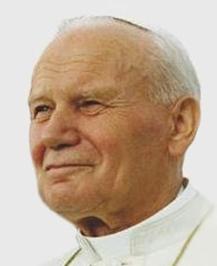
The entirety of Blessed Pope John Paul II's authoritative teaching on Christ's Lay Faithful may be read HERE on the Vatican website. The following is the Introduction to this most important Apostolic Exhortation on the Laity in Christ.  Every lay person in the Church should read and study it, and everyone considering converting to the Church should read, mark, learn, and inwardly digest it:


POST-SYNODAL
APOSTOLIC EXHORTATION
CHRISTIFIDELES LAICI
OF
HIS HOLINESS
JOHN PAUL II
ON THE VOCATION AND THE MISSION
OF THE LAY FAITHFUL
IN THE CHURCH AND IN THE WORLD


To Bishops
To Priests and Deacons
To Women and Men Religious
and to All the Lay Faithful


INTRODUCTION


1. THE LAY MEMBERS of Christ's Faithful People (Christifideles Laici), whose "Vocation and Mission in the Church and in the World Twenty Years after the Second Vatican Council" was the topic of the 1987 Synod of Bishops, are those who form that part of the People of God which might be likened to the labourers in the vineyard mentioned in Matthew's Gospel: "For the Kingdom of heaven is like a householder who went out early in the morning to hire labourers for his vineyard. After agreeing with the labourers for a denarius a day, he sent them into his vineyard" (Mt 20:1-2).

The gospel parable sets before our eyes the Lord's vast vineyard and the multitude of persons, both women and men, who are called and sent forth by him to labour in it. The vineyard is the whole world (cf. Mt 13:38), which is to be transformed according to the plan of God in view of the final coming of the Kingdom of God.

You Go Into My Vineyard Too

2. "And going out about the third hour he saw others standing idle in the marketplace; and to them he said, 'You go into the vineyard too'" (Mt 20:3-4).

From that distant day the call of the Lord Jesus "You go into my vineyard too" never fails to resound in the course of history: it is addressed to every person who comes into this world.

In our times, the Church after Vatican II in a renewed outpouring of the Spirit of Pentecost has come to a more lively awareness of her missionary nature and has listened again to the voice of her Lord who sends her forth into the world as "the universal sacrament of salvation"(1).

You go too. The call is a concern not only of Pastors, clergy, and men and women religious. The call is addressed to everyone: lay people as well are personally called by the Lord, from whom they receive a mission on behalf of the Church and the world. In preaching to the people Saint Gregory the Great recalls this fact and comments on the parable of the labourers in the vineyard: "Keep watch over your manner of life, dear people, and make sure that you are indeed the Lord's labourers. Each person should take into account what he does and consider if he is labouring in the vineyard of the Lord"(2).

The Council, in particular, with its rich doctrinal, spiritual and pastoral patrimony, has written as never before on the nature, dignity, spirituality, mission and responsibility of the lay faithful. And the Council Fathers, re-echoing the call of Christ, have summoned all the lay faithful, both women and men, to labour in the vineyard: "The Council, then, makes an earnest plea in the Lord's name that all lay people give a glad, generous, and prompt response to the impulse of the Holy Spirit and to the voice of Christ, who is giving them an especially urgent invitation at this moment. Young people should feel that this call is directed to them in particular, and they should respond to it eagerly and magnanimously. The Lord himself renews his invitation to all the lay faithful to come closer to him every day, and with the recognition that what is his is also their own (Phil 2:5) they ought to associate themselves with him in his saving mission. Once again he sends them into every town and place where he himself is to come (cf. Lk 10:1)"(3).

You go into my vineyard too. During the Synod of Bishops, held in Rome, 1-30 October 1987, these words were re-echoed in spirit once again. Following the path marked out by the Council and remaining open to the light of the experience of persons and communities from the whole Church, the Fathers, enriched by preceding Synods, treated in a specific and extensive manner the topic of the vocation and mission of the lay faithful in the Church and in the world.

In this assembly of bishops there was not lacking a qualified representation of the lay faithful, both women and men, which rendered a valuable contribution to the Synod proceedings. This was publicly acknowledged in the concluding homily: "We give thanks that during the course of the Synod we have not only rejoiced in the participation of the lay faithful (both men and women auditors), but even more so in that the progress of the Synodal discussions has enabled us to listen to those whom we invited, representatives of the lay faithful from all parts of the world, from different countries, and to profit from their experience, their advice and the suggestions they have offered out of love for the common cause"(4).

In looking over the years following the Council the Synod Fathers have been able to verify how the Holy Spirit continues to renew the youth of the Church and how he has inspired new aspirations towards holiness and the participation of so many lay faithful. This is witnessed, among other ways, in the new manner of active collaboration among priests, religious and the lay faithful; the active participation in the Liturgy, in the proclamation of the Word of God and catechesis; the multiplicity of services and tasks entrusted to the lay faithful and fulfilled by them; the flourishing of groups, associations and spiritual movements as well as a lay commitment in the life of the Church; and in the fuller and meaningful participation of women in the development of society.
.
At the same time, the Synod has pointed out that the post-conciliar path of the lay faithful has not been without its difficulties and dangers. In particular, two temptations can be cited which they have not always known how to avoid: the temptation of being so strongly interested in Church services and tasks that some fail to become actively engaged in their responsibilities in the professional, social, cultural and political world; and the temptation of legitimizing the unwarranted separation of faith from life, that is, a separation of the Gospel's acceptance from the actual living of the Gospel in various situations in the world.

In the course of its work, the Synod made constant reference to the Second Vatican Council, whose teaching on the lay faithful, after twenty years, has taken on a surprisingly contemporary character and at times has carried prophetic significance: such teaching has the capacity of enlightening and guiding the responses that today must be given to new situations. In reality, the challenge embraced by the Synod Fathers has been that of indicating the concrete ways through which this rich "theory" on the lay state expressed by the Council can be translated into authentic Church "practice". 

Some situations have made themselves felt because of a certain "novelty" that they have, and in this sense they can be called post-conciliar, at least chronologically: to these the Synod Fathers have rightly given a particular attention in the course of their discussion and reflection. Among those situations to be recalled are those regarding the ministries and Church services entrusted at present and in the future to the lay faithful, the growth and spread of new "movements" alongside other group forms of lay involvement, and the place and role of women both in the Church and in society.

At the conclusion of their work, which proceeded with great commitment, competence and generosity, the Synod Fathers made known to me their desires and requested that at an opportune time, a conclusive papal document on the topic of the lay faithful be offered to the Universal Church(5).

This Post-Synodal Apostolic Exhortation intends to take into account all the richness of the Synod work, from the Lineamenta to the Instrumentum Laboris, from the introductory report, the presentations of individual bishops and lay persons to the summary reports after discussion in the Synod hall, from the discussions and reports of the "small groups" to the final "Propositions" and the concluding "Message". For this reason the present document is not something in contradistinction to the Synod, but is meant to be a faithful and coherent expression of it, a fruit of collegiality. As such, the Council of the General Secretariat of the Synod of Bishops and the Secretariat itself have contributed to its final form.
This Exhortation intends to stir and promote a deeper awareness among all the faithful of the gift and responsibility they share, both as a group and as individuals, in the communion and mission of the Church.

+Laudetur Jesus Christus.